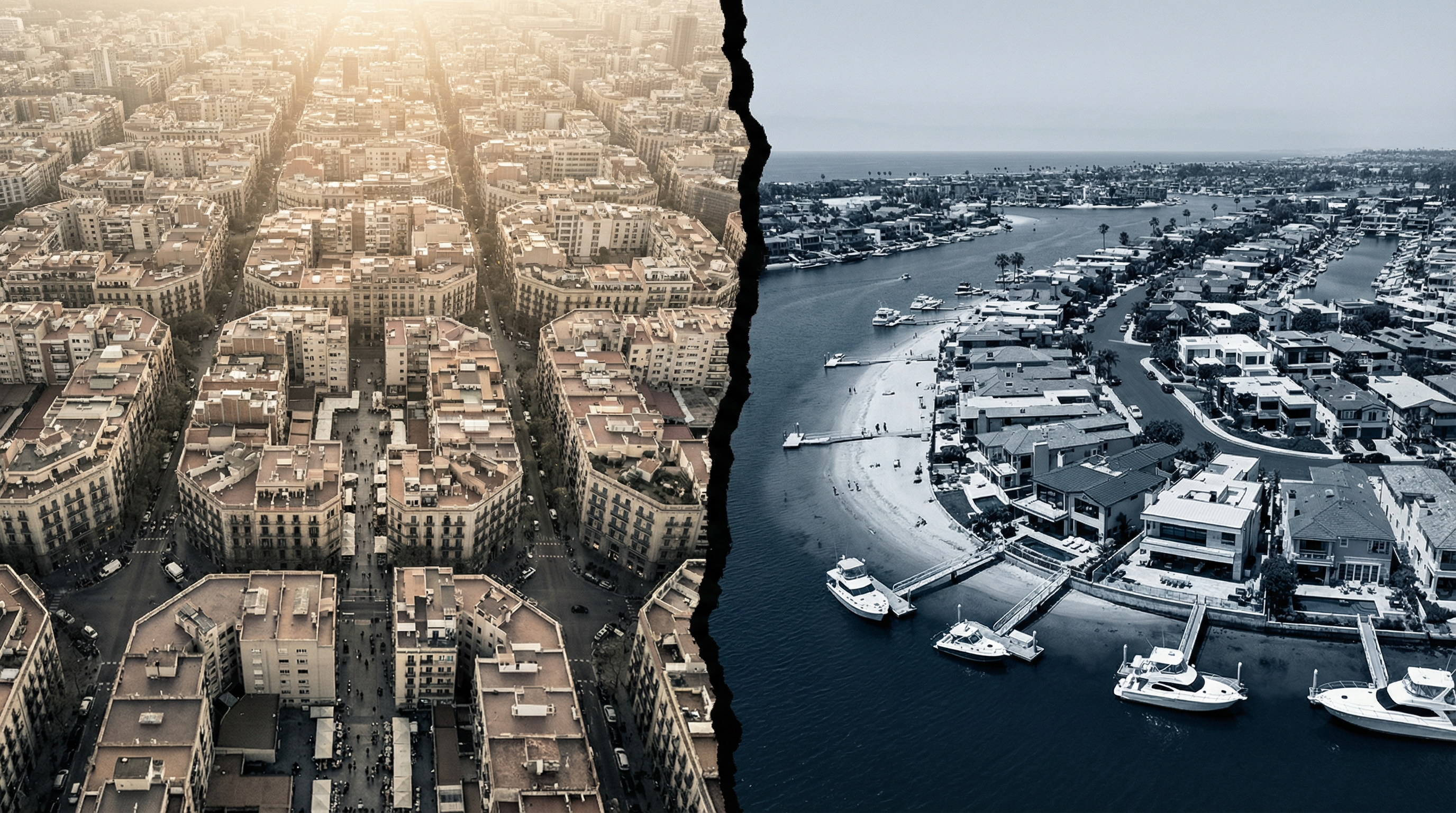
Two Beautiful
Cities
Only one is built for millions.
How housing policy—not beauty—determines who gets to live where.
If Barcelona and Newport Beach are equally beautiful, why can one house over a million people... and the other fewer than 100,000?
This is not a beauty problem. This is a housing, zoning, and urban design decision.
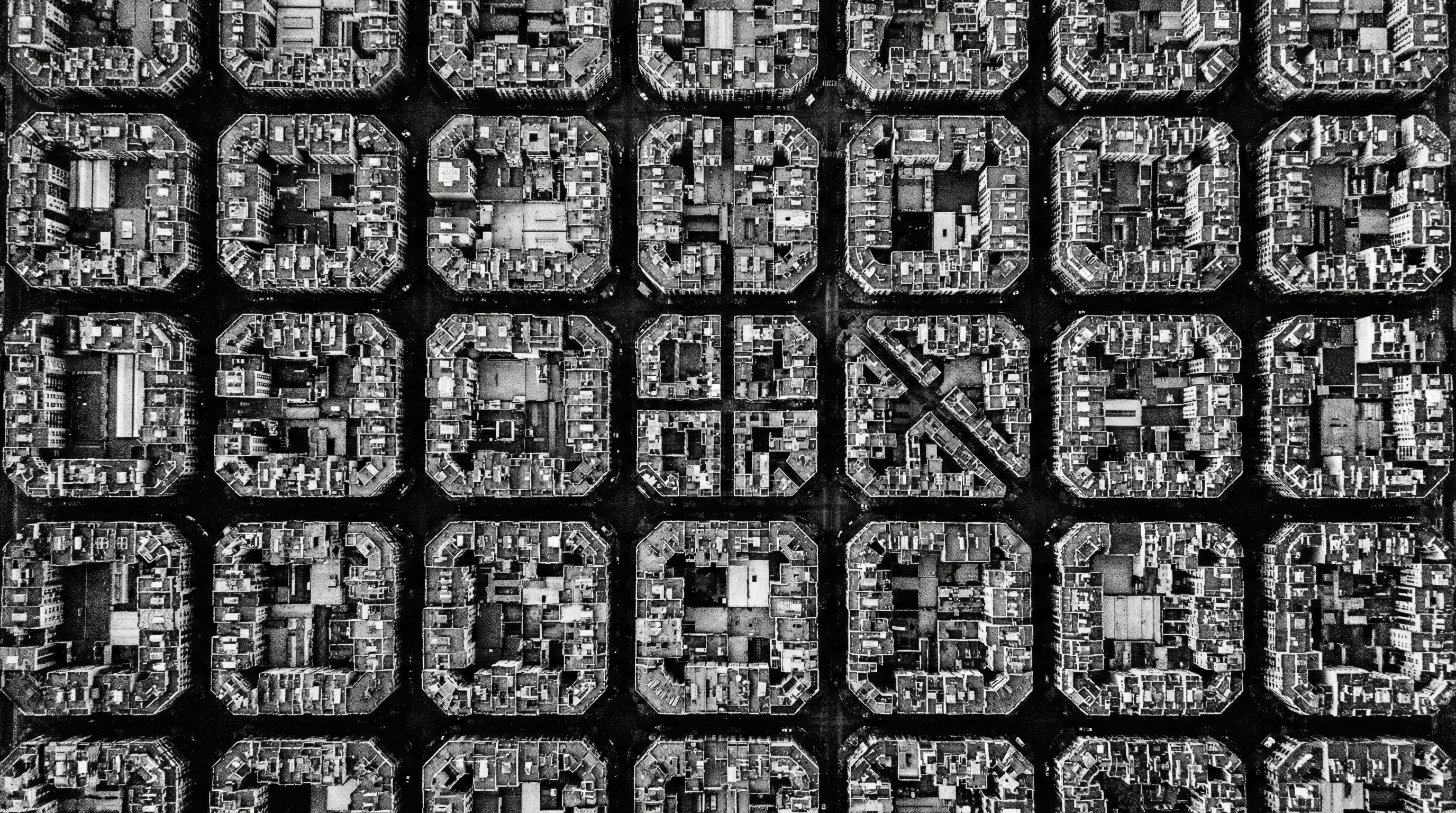
Barcelona
Population
~1.7M
Density
~40k / sq mi
Zoning
Mixed-use by default
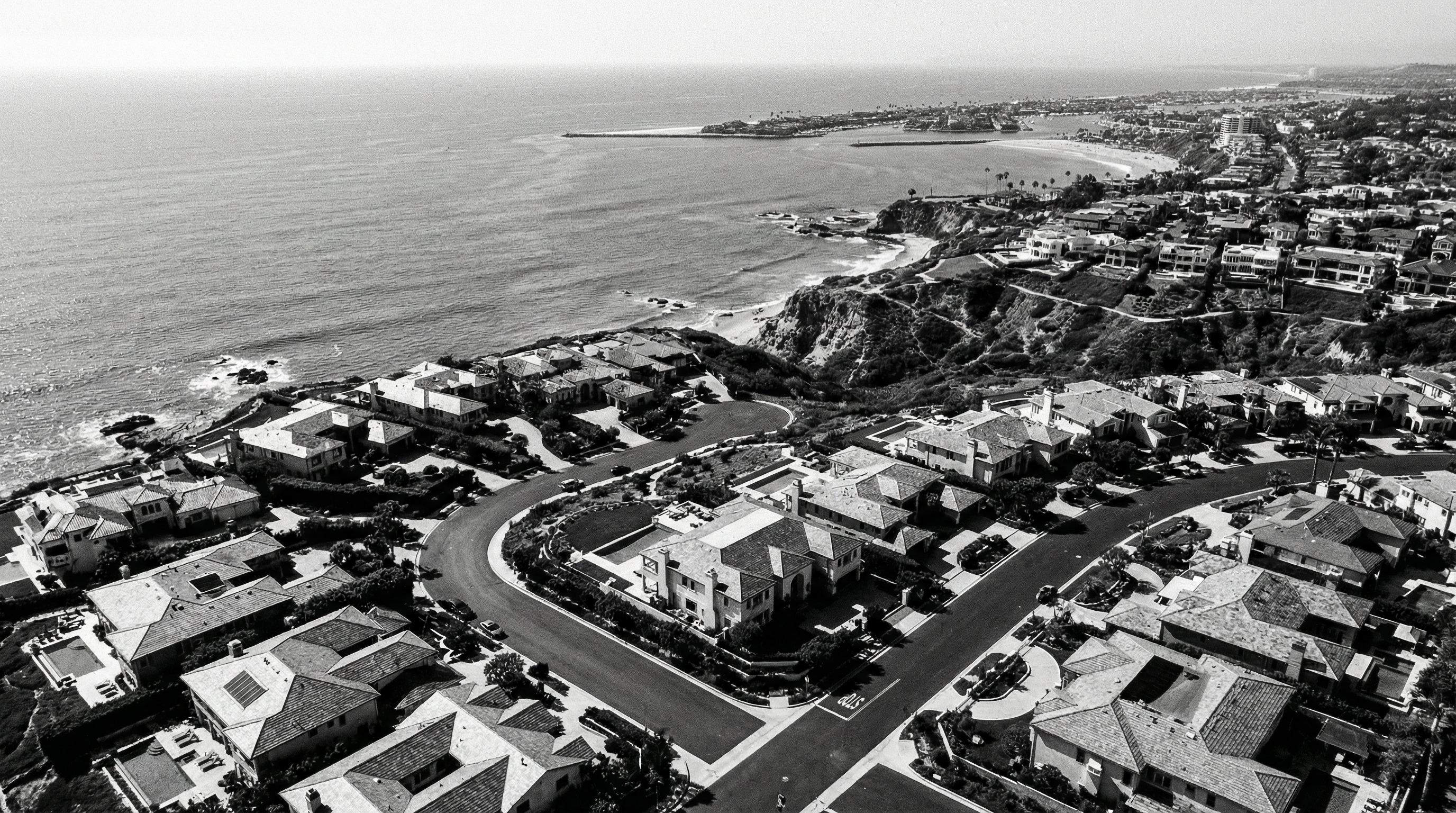
Newport
Population
~85k
Density
~3k / sq mi
Zoning
Height limits, coastal overlays
Density Is Not Crowding.
It’s a Design Choice.
Barcelona uses vertical living to create vibrant, shared spaces. The density supports transit, commerce, and community.
Newport preserves horizontal exclusivity. The scarcity protects property values but isolates residents and mandates car dependency.
Same coastline, opposite philosophies.
Barcelona
- 01.Housing as civic infrastructure
- 02.Renting normalized & protected
- 03.Smaller private space, richer public life
Newport Beach
- 01.Housing as a financial asset
- 02.Scarcity protects value
- 03.Larger private space, limited access
“Scarcity isn’t a market failure. It’s a policy.”
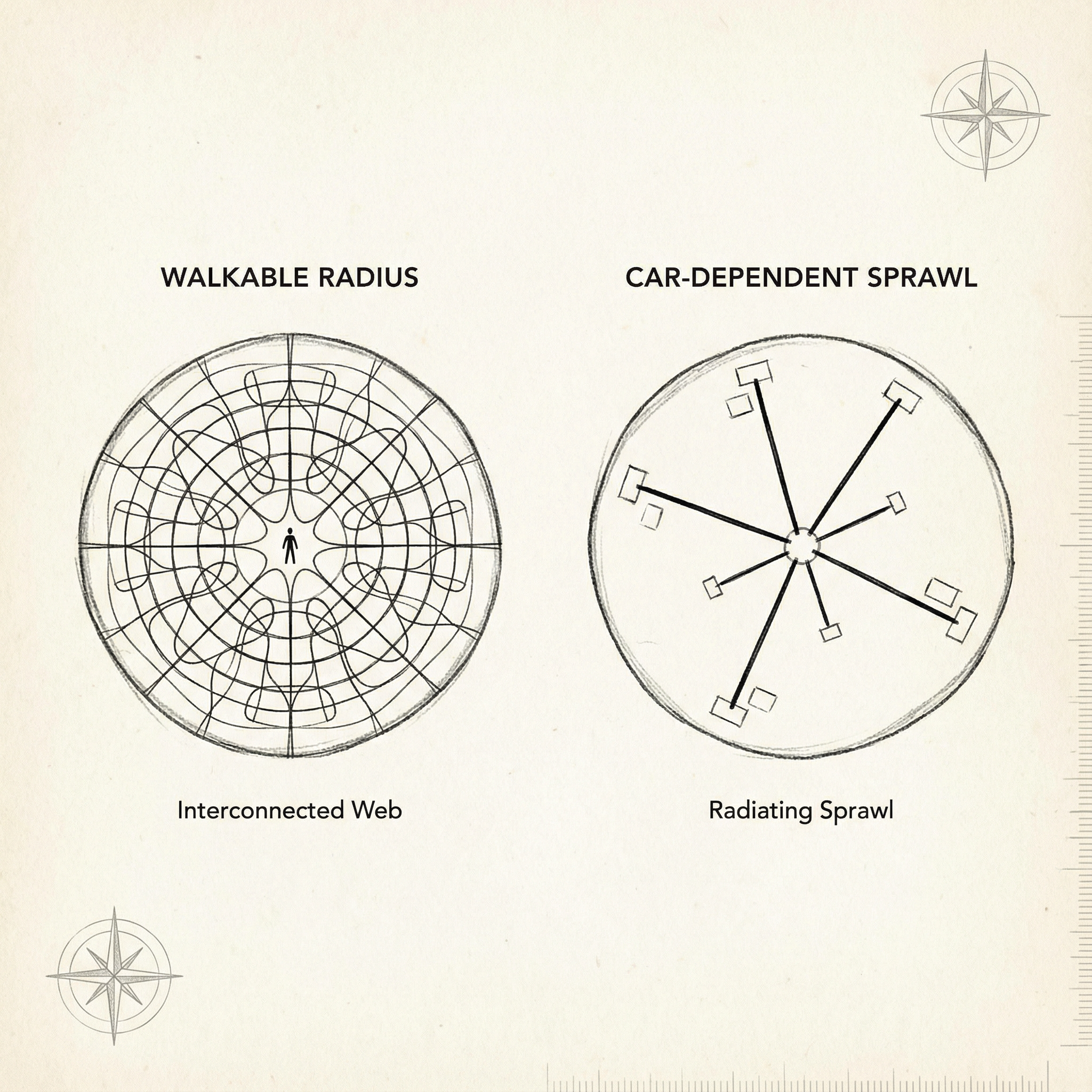
The Geometry of Access
Barcelona is a web. You are never more than a 5-minute walk from a bakery, a park, or a bus stop. The city absorbs movement.
Newport Beach is a branch. Cul-de-sacs feed into arterials. Every trip requires a car. The city resists movement.
*Transportation assumptions silently cap population growth. You cannot add density to a system designed only for cars.
Newport Beach could house far more people and remain beautiful.
It chooses not to.
Property iQ Perspective
What This Means for Real Estate, Cities, and the Future
Urban Economics
Artificial scarcity drives prices up, but stifles economic dynamism. Cities that cannot grow eventually stagnate as the workforce is priced out.
Future Demand
The next generation of buyers values access over isolation. Mixed-use, walkable environments are commanding higher premiums than ever before.